
Guides
Animation or live action? How to choose the right way to explain a complex idea
The right explainer format depends on what the audience needs to see, who can make it credible and which parts of the idea cannot be filmed.
When a brief contains a lot of information, it is tempting to decide the format first: film it, animate it, or put a voice-over on a set of graphics. A better starting point is the person watching. What do they need to understand, believe or do when the film ends? Which part of the subject can they see for themselves, and which part needs to be made visible?
Live action and animation solve different problems. Many good explainers use both. The choice becomes clearer when each image has a job in the story.
Begin with the audience question
A complex brief may contain background, technical detail, required claims and several stakeholder priorities. The viewer may need only one clear route through them. Before choosing a technique, write down the central question the film must answer and the facts that cannot be changed.
For a product, that question might be what it does and why its process matters. For a public-education film, it may be what someone should recognise or understand in a familiar situation. For a school series, it may be how to picture a concept that cannot be observed directly. The visual treatment follows from that decision.
It also helps to identify who will approve the claims. Technical, health and public-sector subjects need factual review built into treatment and script development. Accuracy is harder to repair after scenes have been shot or animation has been completed.
Use live action when the real world is the evidence
Filming is powerful when people, places, products and processes are part of the answer. An interview can let a person explain a decision in their own voice. A factory or laboratory can show work taking place. A demonstration can make scale, handling or human effort more tangible than a diagram alone.
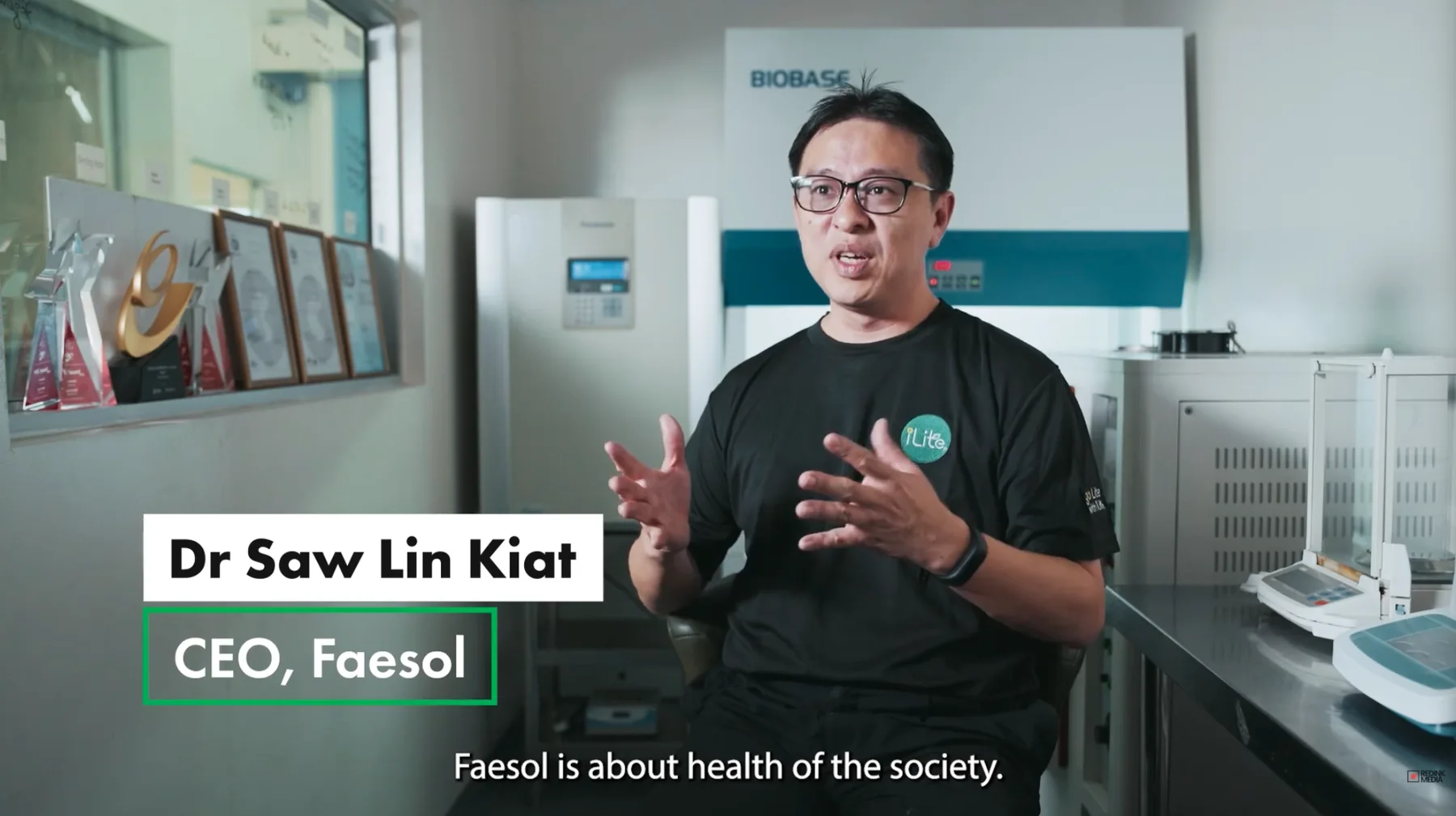
Faesol iLite is an example. The film used interviews, factory workflows and laboratory footage so prospective customers could see the work behind the product. Red Ink handled creative production, filming and post-production, integrating animation with that live-action material. Red Ink did not write the script.
The camera was useful because the actual environment mattered. Filming it gave the technical story texture and credibility. The edit then had to give those images a clear route, so the result felt like a film about a product and its making, not a catalogue of machinery.
Live action does have practical demands. Access, safety, locations, people and the amount of process that can be shown all shape the treatment. A credible real-world image is worth planning for, but it should not be asked to explain something it cannot reveal.
The choice becomes clearer when each image has a job in the story.
Use animation when the important part is hard to film
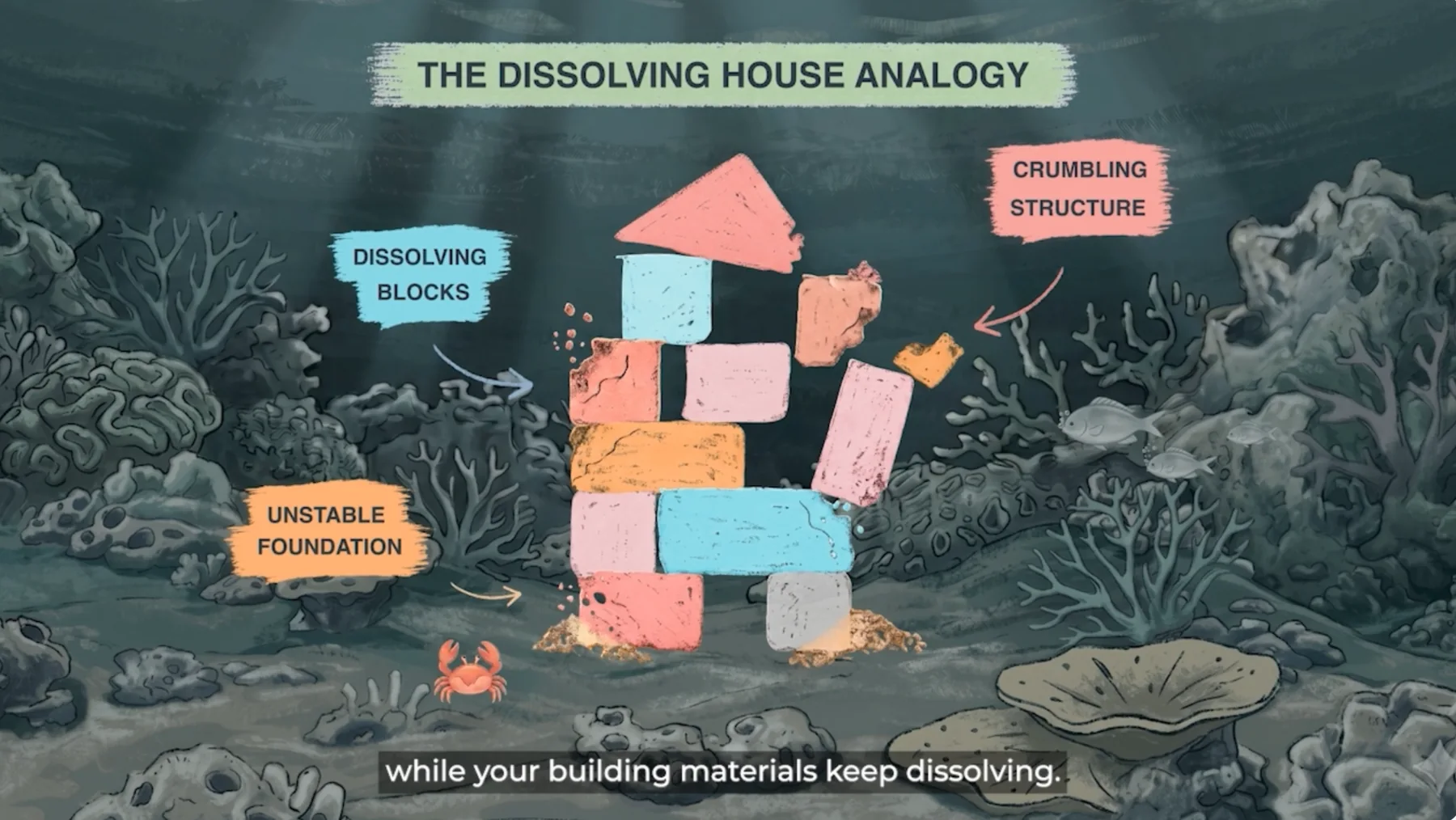
Animation earns its place when the viewer needs to see a relationship, mechanism or change that a camera cannot show clearly. It can simplify a process, move between scales, show a sequence over time or give an abstract idea a repeatable visual language. The point is to improve understanding, not to decorate every sentence.
MOE’s Let’s Go GEO uses 2D visual explanation and character-led 3D episodes to make geography concepts easier to follow. Red Ink developed treatment, writing and production from an originating concept and character designs supplied to the team. The 2D work gives explanations a visual structure; the 3D characters help carry viewers through a recurring world. The different techniques serve the same educational aim without asking one style to do every job.
Animation also needs decisions about what is factually fixed. A beautiful image can still mislead if its labels, proportions or sequence imply the wrong thing. Subject-matter review should happen while the explanation can still be changed, not only after the final frames are polished.
Combine them when each answers a different question
A hybrid film works when the switch between live action and animation helps the audience. Film the people and physical evidence. Animate what cannot be seen, or what would take too long to explain through footage alone. The two methods should advance one story rather than repeat the same information in different forms.
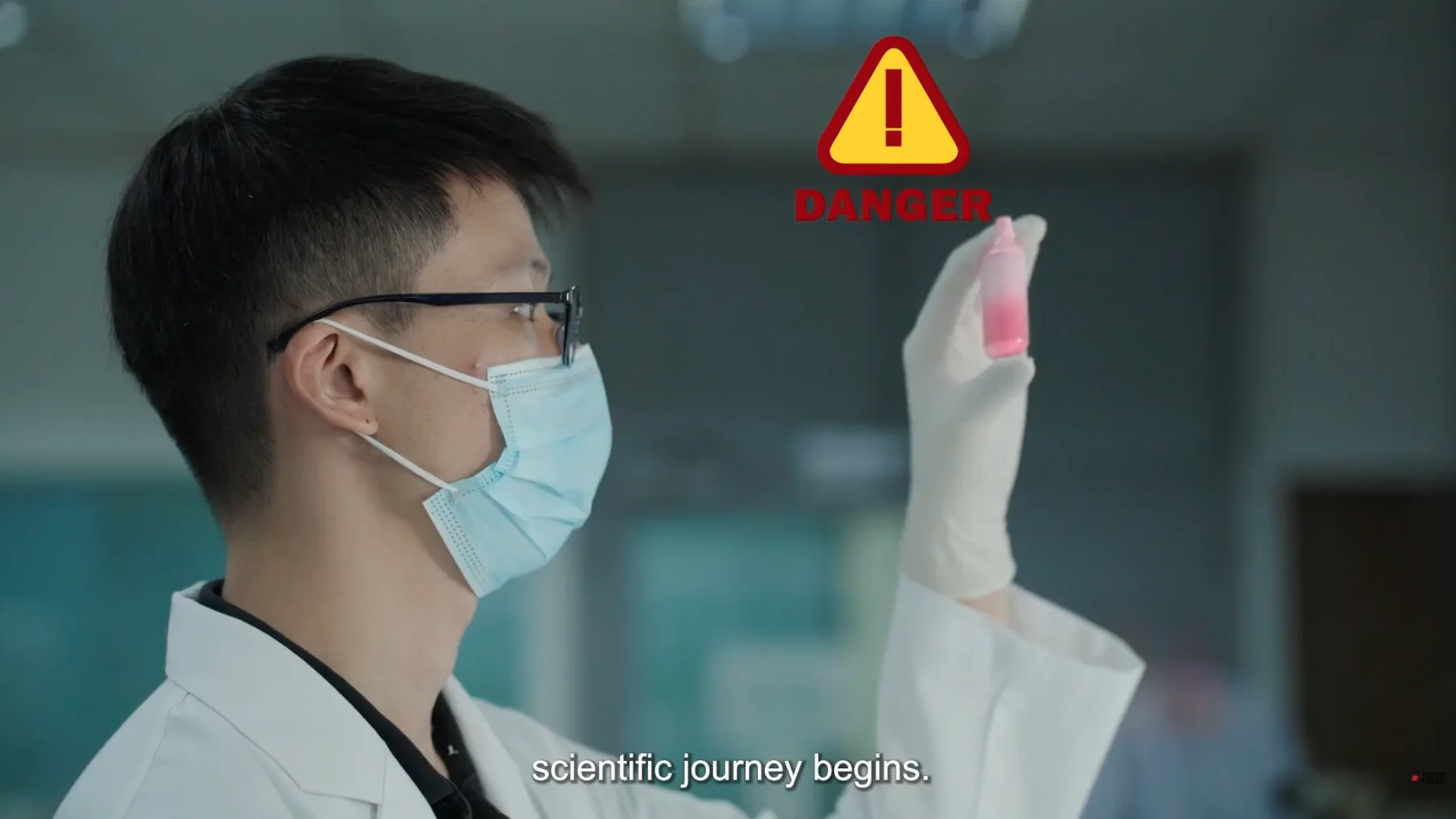
Faesol iLite used this approach to connect human explanation and real industrial work with animated details. Health Promotion Board’s Anti-Vape film used interviews, realistic student scenarios and animated or graphic explanation in a school-ready format. Red Ink wrote, cast and produced the secondary-school version, then adapted the language for primary pupils. The mix of methods helped the film move between lived situations and information that needed explicit explanation.
Neither example means every technical or public message needs a hybrid treatment. The extra method should earn its production time by answering a question the first method leaves open.
A simple way to make the choice
Before committing to a format, ask:
- What must the viewer understand at the end? Put the essential audience question ahead of the full list of facts.
- What can be shown honestly on camera? Identify the people, places and processes that make the subject tangible.
- What cannot be filmed clearly? Use animation or graphics for hidden mechanisms, relationships or changes over time.
- Where will the film be watched? A classroom, meeting, website and social feed place different demands on pace, detail and sound.
- Who approves the information? Agree on factual sources and review owners before production choices become expensive to change.
Choose for the viewer
The answer may be live action, animation, or a combination. The strongest choice is the one that makes the idea easier to follow and gives the viewer a reason to keep watching.
Common questions
Is animation always better for complex subjects?
No. If people, places or a real process can show the answer clearly, live action may be more direct. Animation is useful when a key relationship, mechanism or change cannot be filmed well. The audience question should decide the mix.
Can an explainer combine filmed footage and animation?
Yes. Faesol iLite combined interviews and factory and laboratory footage with animation. Health Promotion Board’s Anti-Vape film combined live-action scenarios, interviews and visual explanation. In each case, the methods had different jobs within one film.
When should subject-matter experts review an explainer?
Bring them in during treatment and script development, before the team films scenes or completes animation. Identify the claims that cannot move and the people responsible for approving them. That gives the creative team room to make the message clear without discovering a factual problem at the end.
THE NEXT FRAME
Have a complex idea to explain?
Tell us who needs to understand it and what they need to take away.
Discuss a project