
Behind the Work
How We Made Nearly 30 Students Feel Like One Story
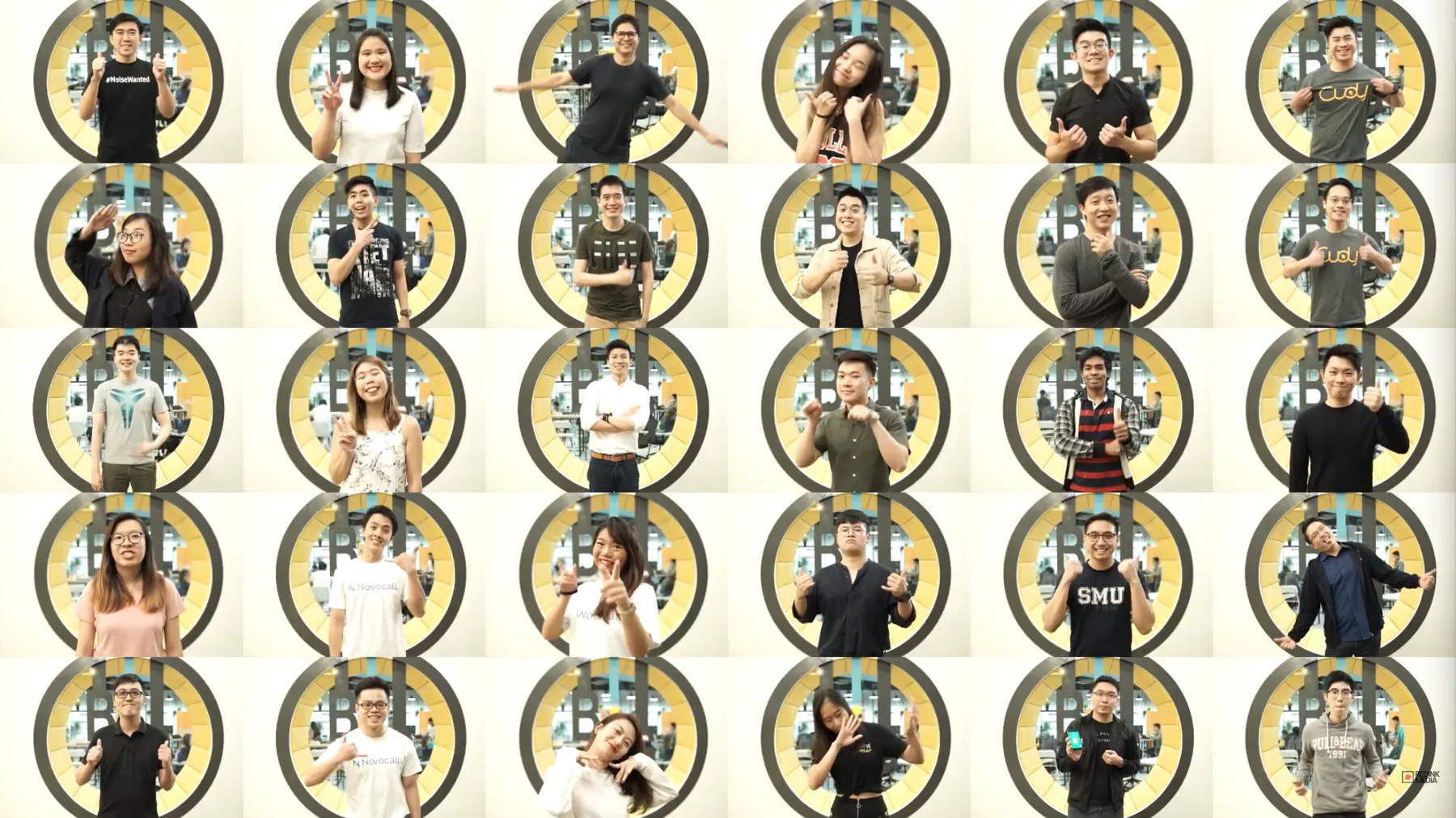
Nearly 30 students appear in one split-screen sequence in our SMU IIE brand film. The number makes an interesting frame. The more useful question is what holds all those different people together as a story.
SMU’s Institute of Innovation and Entrepreneurship wanted to raise its profile among students already at the university and those who might join. We needed to introduce different student experiences while giving the audience a reason to keep watching beyond the first one.
A series of interviews could have carried the information. For this film, we wanted more variation in how those experiences reached the viewer. Different visual treatments gave the students their own space; a connecting voice gave the film continuity.
Give different stories room to feel different
We used timelapse, split-screen compositions, motion graphics and moments in which students speak directly to the camera, breaking the fourth wall. Those choices gave the film changes of rhythm and perspective.
For someone commissioning a similar film, the useful distinction is between having several contributors and making every contribution follow the same pattern. A familiar pattern can be clear, but if the audience knows exactly how every section will unfold, there may be little curiosity left.
In this film, variation gives the viewer something new to notice. The treatments still need to belong to the same overall idea. Otherwise, a collection of impressive shots can feel like several films competing with one another.
Bring the students into one frame
The portrait grid brings close to 30 students into a single split-screen sequence. That figure refers to the sequence, not to 30 separate student interviews.
The film was shot over two days. Coordinating the people and performances was part of the production challenge, alongside giving the individual stories their distinct treatments. The finished grid makes that coordination visible: many participants share one composition rather than appearing as a long succession of isolated faces.
For a viewer, the sequence offers a way to take in the group together. For a commissioner, it is a useful question to bring into the creative discussion: when should the audience meet people individually, and when would seeing them together communicate more?
Give the connecting voice a payoff
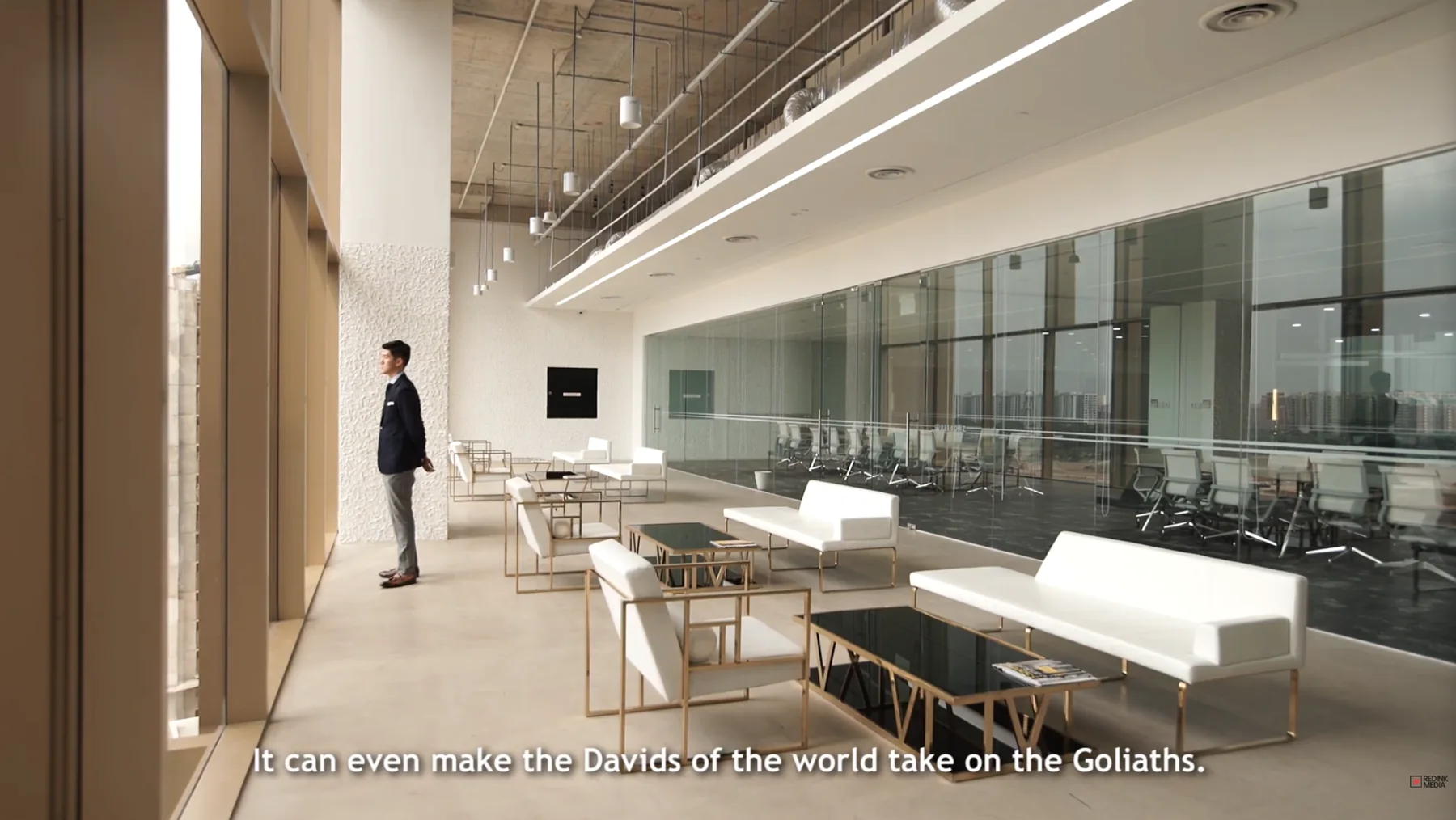
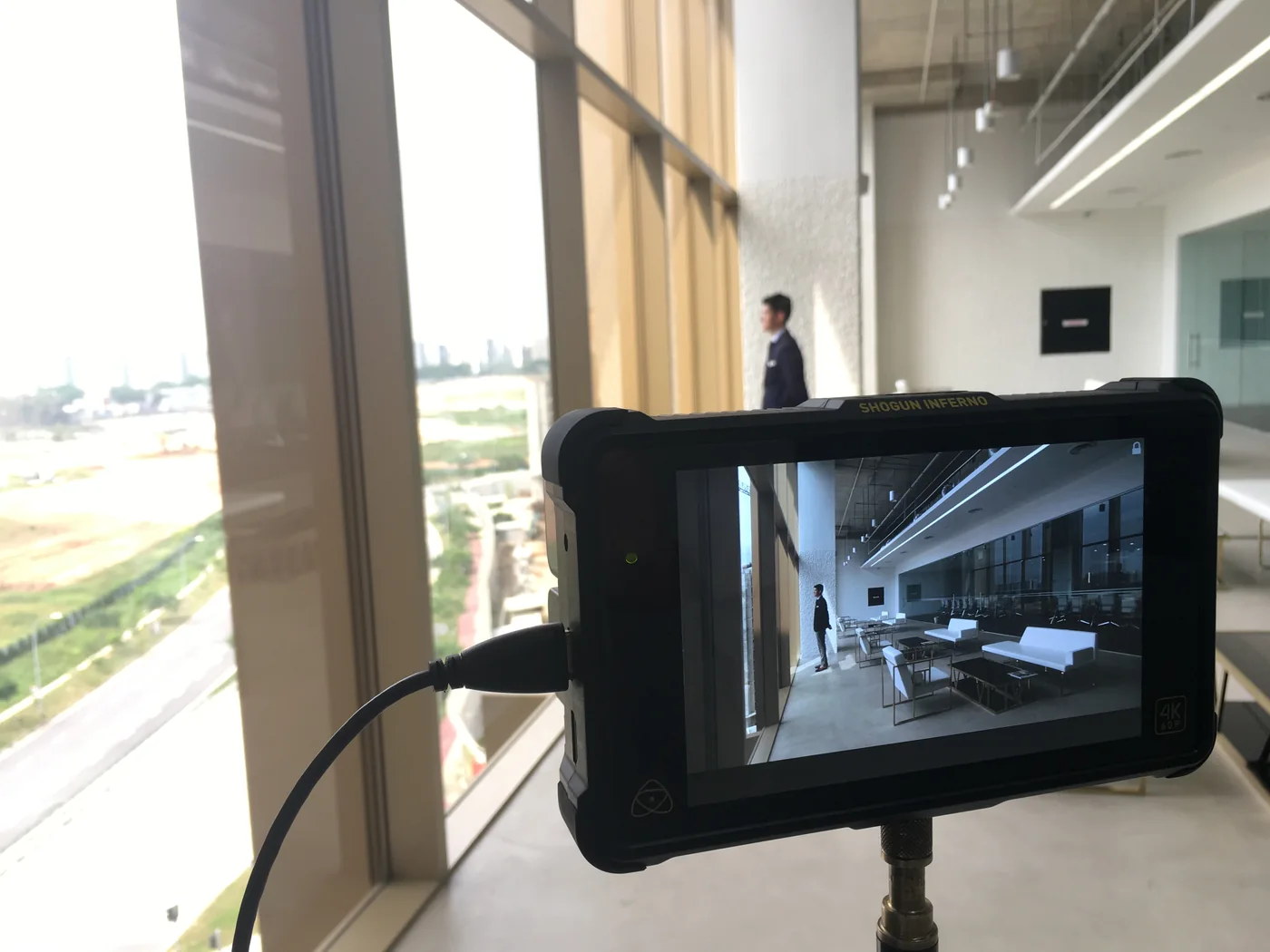
One voice runs through the film, but its identity is held back until the end. The narrator is revealed as the dean featured in the original production.
That delayed introduction gives the audience a small discovery. By the time they see who has been speaking, they have already travelled through the students’ experiences. The reveal connects the voice to a person and brings the different stories back together.
The lesson for another film is not that every narrator needs a secret identity. It is that the order in which information arrives can be part of the storytelling. An introduction does not always have to happen at the first possible moment.
Start with what the viewer can follow
An institutional film can have a clear communication purpose and still offer the pleasures of watching a story: contrast, anticipation and a satisfying turn.
For SMU IIE, different student experiences gave us the material. The visual treatments created variety. The shared voice and its final reveal helped those experiences feel connected.
If your next film needs to feature several people, begin by asking what the audience should understand about them together. Then decide what deserves its own treatment, what can be seen in one frame, and what will keep the viewer curious until the end.
See the SMU IIE project: https://redinkmedia.asia/work/smu-iie/
Explore our campaign and brand films: https://redinkmedia.asia/what-we-make/campaign-brand-films/
Questions for your next institutional film
How do you make a university brand film engaging?
Give the audience people and a story to follow, rather than relying only on a list of programmes. In our SMU IIE film, different student treatments and a delayed narrator reveal provided variety and a reason to stay.
How do you feature multiple people without a repetitive testimonial format?
Consider what each person’s contribution needs to communicate before deciding that everyone should appear in the same format. SMU IIE combined individual student moments with a split-screen group sequence. Interviews remain useful when they serve the story.
How can split-screen editing support a story?
It can show several people or experiences together. In this film, the student portrait grid brings a large group into one composition. Use it when that relationship matters, not merely to add another visual effect.
What makes a corporate film feel cinematic?
A deliberate choice of what viewers see, hear and discover next can matter as much as the images themselves. In this project, changes in visual treatment and the narrator reveal shaped the viewing experience. “Cinematic” does not require every institutional film to use the same techniques.
Film caption transcript
[00:02] Narrator:
What makes a world-class university incubator?
Is it the collaborative spaces?
[00:10] Interview participant:
I call this my second home.
[00:13] Narrator:
Or the fact that it’s located right in the heart of Singapore?
Is it the community that it creates?
Or the many world-class mentors that it is connected with?
[00:27] Interview participant:
I always tell them it is not about building that link or making that connection.
It is about building relationships.
[00:35] Narrator:
Is it the competitions that it organizes that bring people closer to their dreams?
[00:40] UglyGood participants:
Today, we are the top 5 teams. Hoping to gun for the winning spot.
It has been three years, a very long period of time.
[00:48] Event announcer:
For the grand prize, let’s give it to Ugly Good.
[00:55] Narrator:
Is it the way it trains and builds character?
[01:01] Mandy Chan:
I swear one day I am going to start a “Be Bold” movement.
[01:10] Narrator:
Or is it the commitment to help students experience the world
and to broaden their horizons?
Is it the funding that it helps startups raise,
so that the first steps get a little easier?
[01:34] Narrator:
Perhaps it’s all of these and a little more.
Because a truly world-class university incubator
can empower founders to achieve the seemingly impossible.
[01:49] UglyGood participant:
Our mentor connected us to high level CXOs
which would otherwise be hard for us to reach
and we are thankful for that.
[01:56] Narrator:
It can even make the Davids of the world take on the Goliaths.
[02:01] Reebonz interview participant:
If someone had told me when we first started Reebonz
that we would have our own building,
I would have said, “No way. You’re crazy.”
But well, here we are.
[02:18] Narrator:
And best of all, it produces world-class talents
that puts our Little Red Dot on the map.
[02:28] Professor Gerard George, revealed on camera:
Oh and most importantly,
we make the impossible possible.