
Behind the Work
Three claims, one seat: how Priority Seat gives the audience a point of view
A closer look at the characters, competing assumptions and final reversal in Red Ink’s film for StarHub.

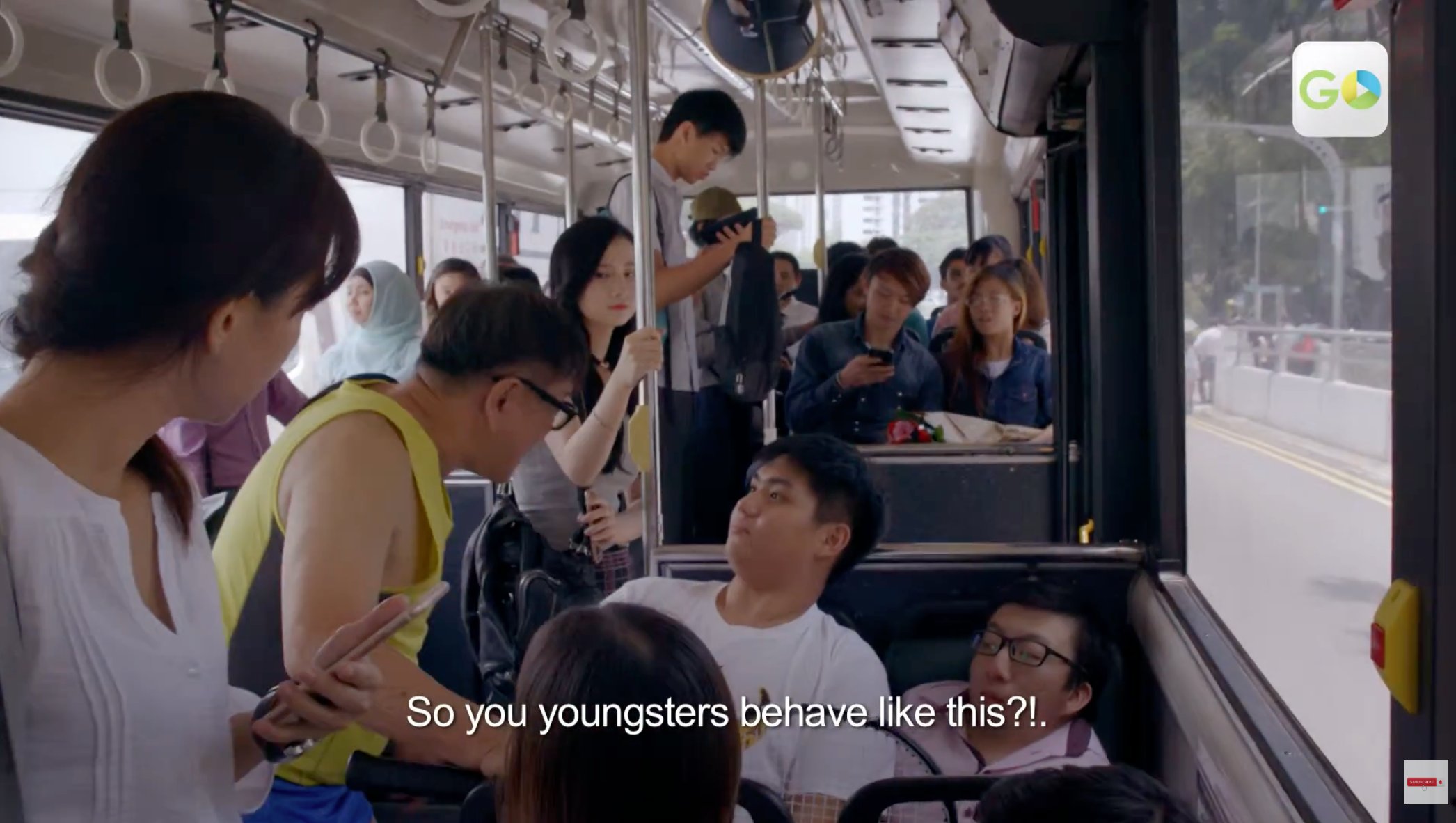
A young man has his arm in a cast. An older man carries a tennis racket. A woman says she is pregnant. On this bus, each believes they have a claim to the priority seat. Who should get it?
That question sits at the centre of Priority Seat, the film we made for StarHub’s Love in Transit campaign. The brief concerned how we treat one another on public transport. The story gives that broad subject a specific problem: several people want the same seat, and they disagree about whose need matters most.
In his reflection on the film, writer and director Gilbert Chan points to those competing views as an important part of its appeal. Everyone can have an opinion. The audience has something to consider before the story reaches its conclusion.
Give each claim something the audience can recognise
The older man’s age is part of his claim, while his sportswear and tennis racket suggest that he is active. The younger man’s cast makes his injury immediately visible. The woman says she is pregnant, although the other passengers cannot establish that simply by looking at her.
These details give the disagreement shape. A viewer might first sympathise with the injured passenger, then think about the older man’s position, then question the assumptions being made about the woman. Different people may read the same moment differently, drawing on experiences they have had on public transport.
The characters also believe their own arguments. That matters because the scene needs to remain a conversation between people with something at stake. If one person exists only to demonstrate the correct behaviour, the audience has much less to work out.
For a campaign brief, this is a useful creative question: what does each person in the scene want, and why would they think their position makes sense? The answers give performers something to play and viewers a reason to follow the exchange.
Let the disagreement do some of the explaining
The priority-seat sign establishes the setting. The people around it create the story. As they challenge one another, the film makes an everyday social rule feel complicated in a way many commuters will recognise.
That is where the audience becomes involved. Viewers can weigh the claims, notice how confidently someone judges a stranger and decide whether they would have acted differently. They can change their minds as the exchange develops. The film gives them a position within the argument.
Gilbert’s view is that this familiar dilemma helped the film find an audience beyond Singapore, particularly in places where priority seats are also part of public transport. The useful creative observation is the familiarity of the situation. A specific local setting can still contain a question that other people recognise.
Turn the assumption back on the person making it
The ending returns to the same question from another direction. The young man offers his seat to a woman he assumes is pregnant. She tells him she is not.
The reversal is connected to everything that came before it. The characters have been arguing over what a stranger’s appearance does or does not tell them. Now an attempt to do the considerate thing creates another awkward moment. The certainty of the assumption becomes the joke.
That connection gives the ending a job beyond producing a laugh. It invites viewers to reconsider how they reached their earlier judgments. The courtesy question remains with them after the immediate argument is over.

Bring the audience question into the brief
When reviewing a campaign-film idea, it helps to look beyond whether all the required messages appear. Ask what the audience will be curious about, which character choices carry that question and what the ending changes.
For Priority Seat, the central question is simple enough to recognise immediately and complicated enough to sustain an argument. Each character adds a perspective. The reversal makes the audience look at the situation again.
A different brief will need its own situation and tone. The useful lesson is to find a human question within the message, then give it enough room to become a story.
Have a campaign message you want people to care about?
Talk to Red Ink about the audience, the situation and the film you need to make.