
Ideas & Technology
We built 1960s Singapore and 2050 on the same stage. Here’s what virtual production taught us.
For The Time Travelling Hawker, we needed to move between 1960s Singapore, a future hawker centre and an altered version of 2050, all within one short film. Virtual production made those worlds possible, but the biggest lessons had surprisingly little to do with technology.
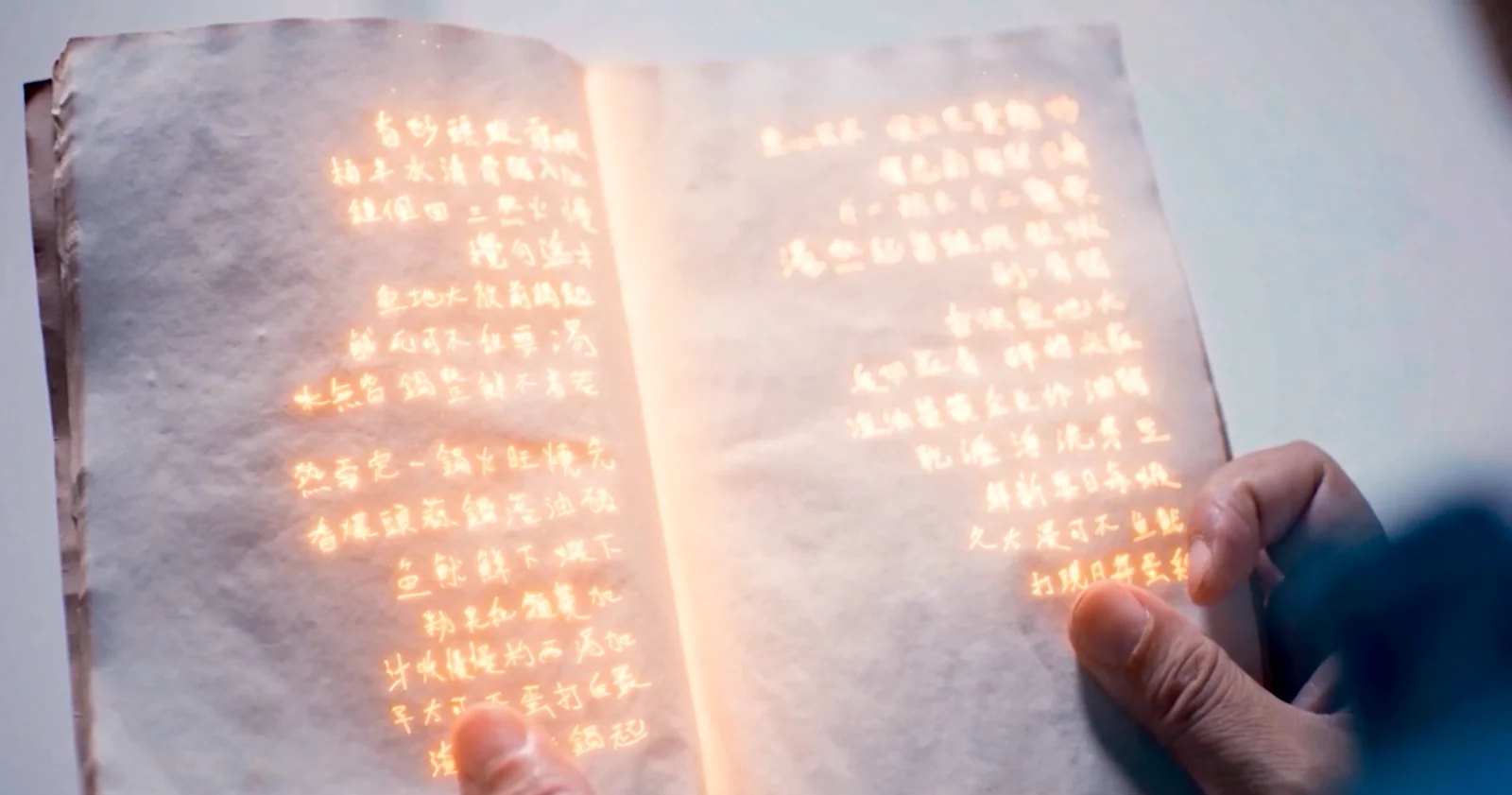
The recipe book opens. Warm golden light reaches the actor’s face as the camera moves towards him. Around him, the world falls into darkness. Then blue streaks take over, carrying him out of one time and into another.
On screen, it lasts only a few seconds. On set, it is a performance shared by almost every department.
The actor has to be in the right place. The camera has to arrive at the right moment. A concealed light in the book supplies the warm glow. Practical lighting changes as the virtual environment shifts, then turns blue with the new world. The VFX plan has to account for the joins.
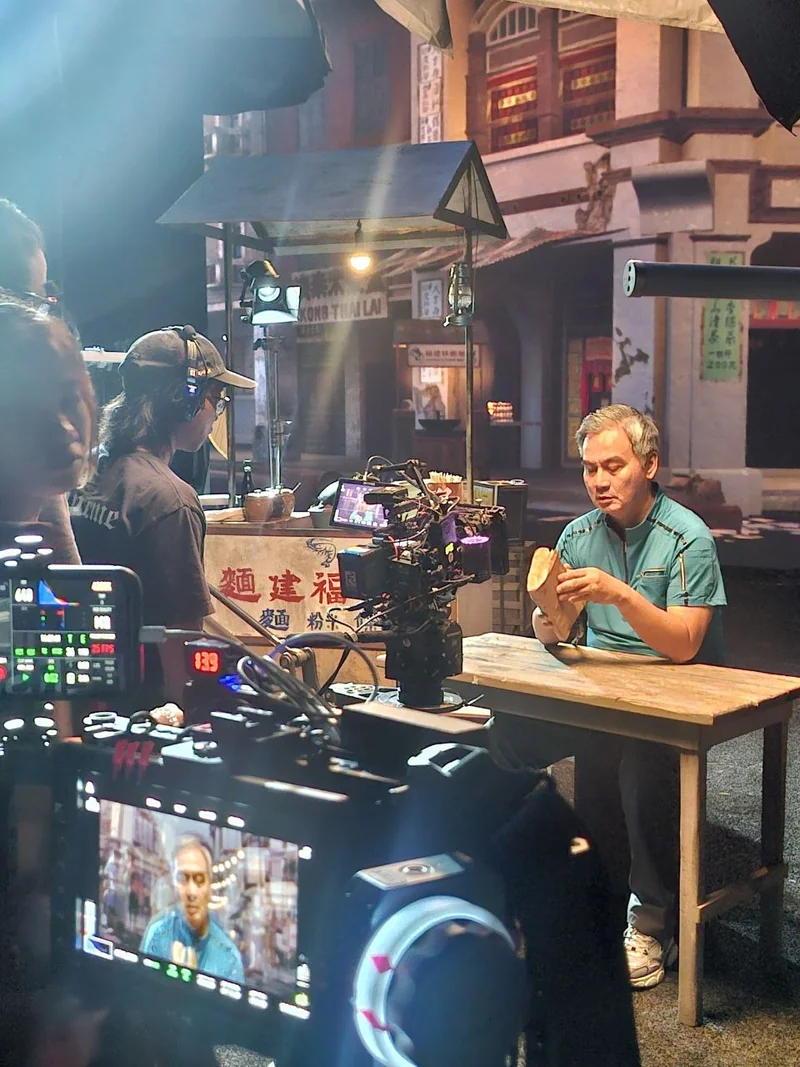
Get one cue wrong and the illusion starts to separate into its parts.
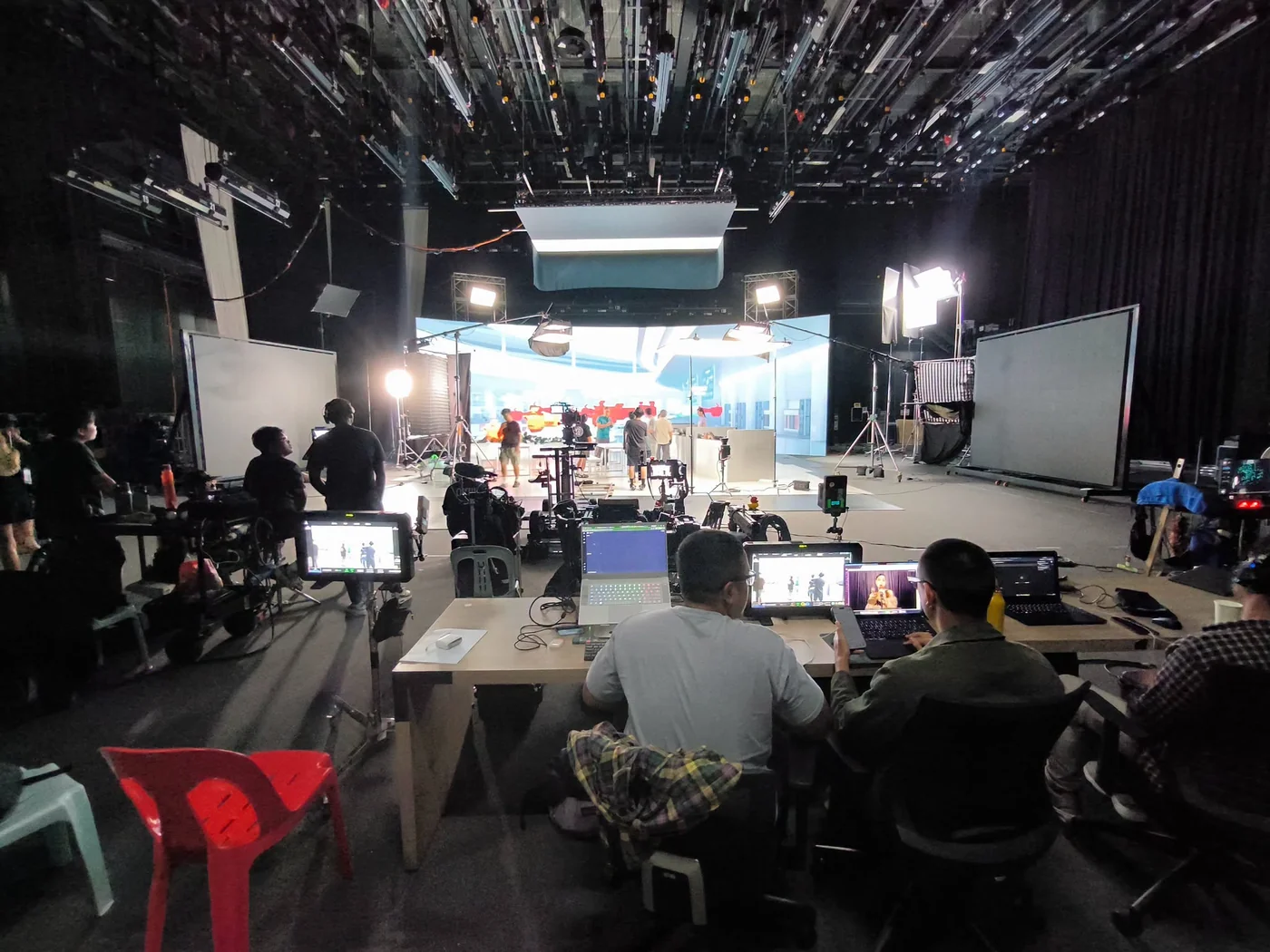
That sequence became a useful way to understand our experience of making The Time Travelling Hawker, Red Ink Media’s first full-scale narrative virtual production project. Working with the specialist VP team at OMG Studios, Iskandar Malaysia Studios, we were learning how to make camera, performance, art, lighting and digital environments tell the same story at the same moment.
Putting a background behind an actor was only the beginning.
The biggest surprise: reality still matters
You can build an extraordinary digital world and still end up with an image nobody believes.
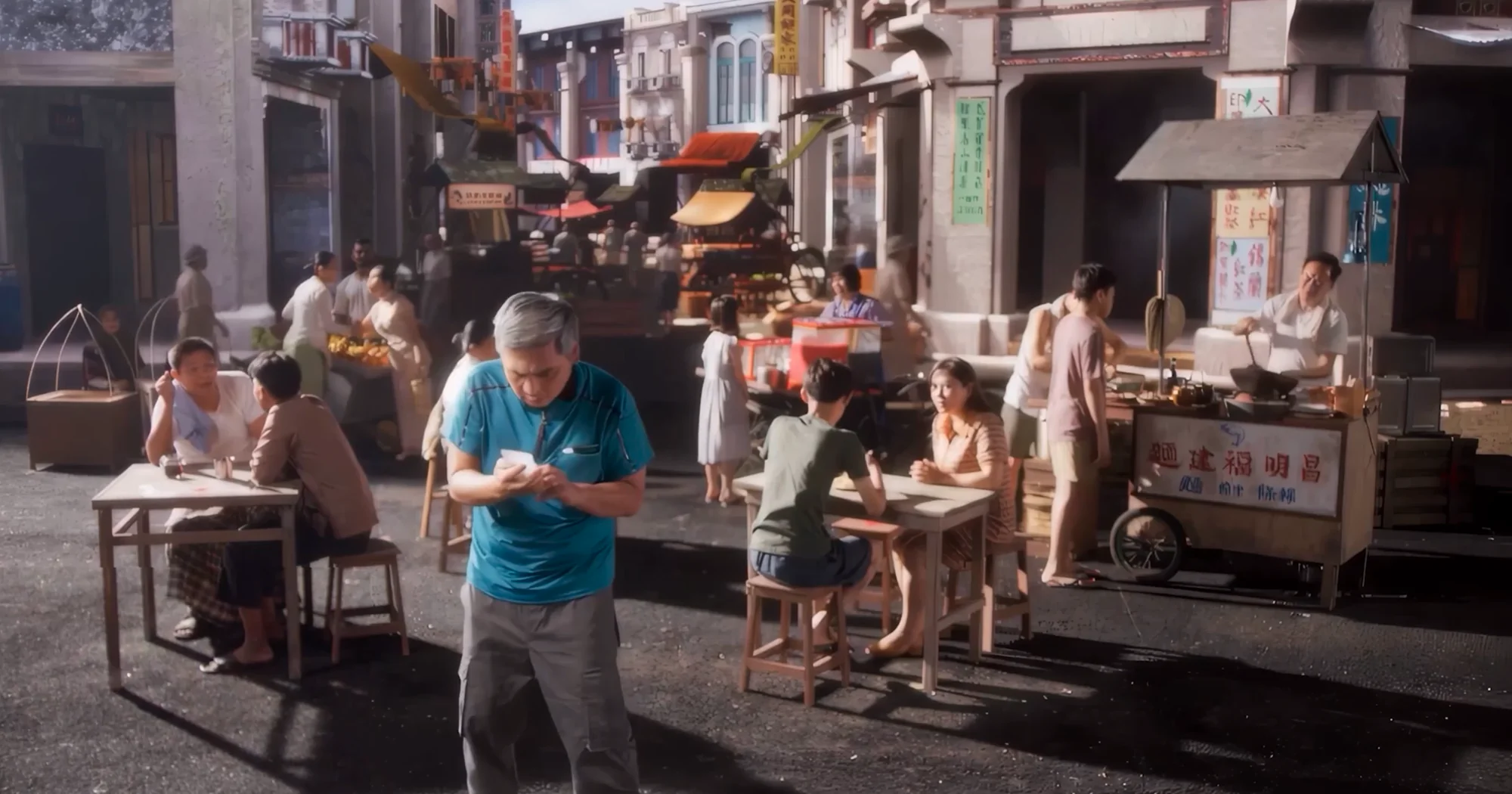
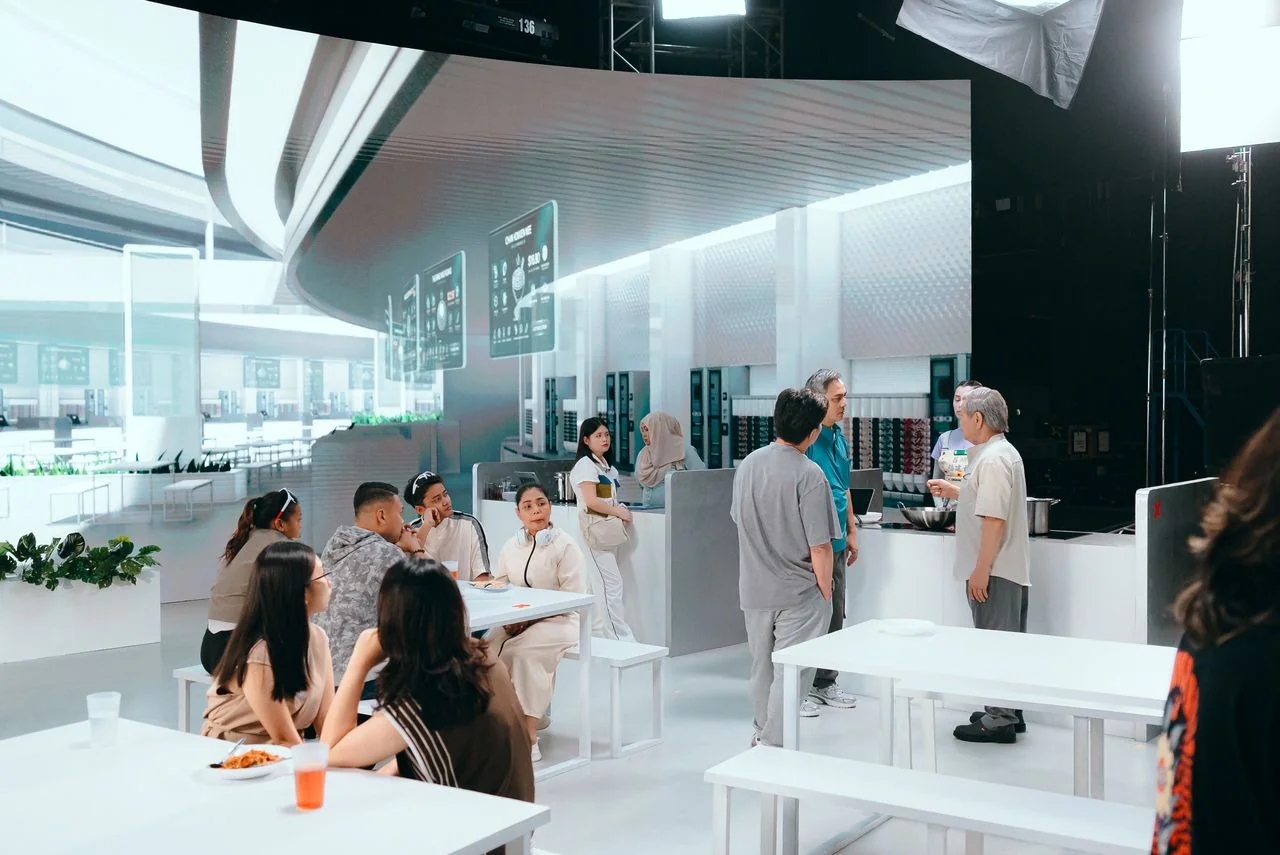
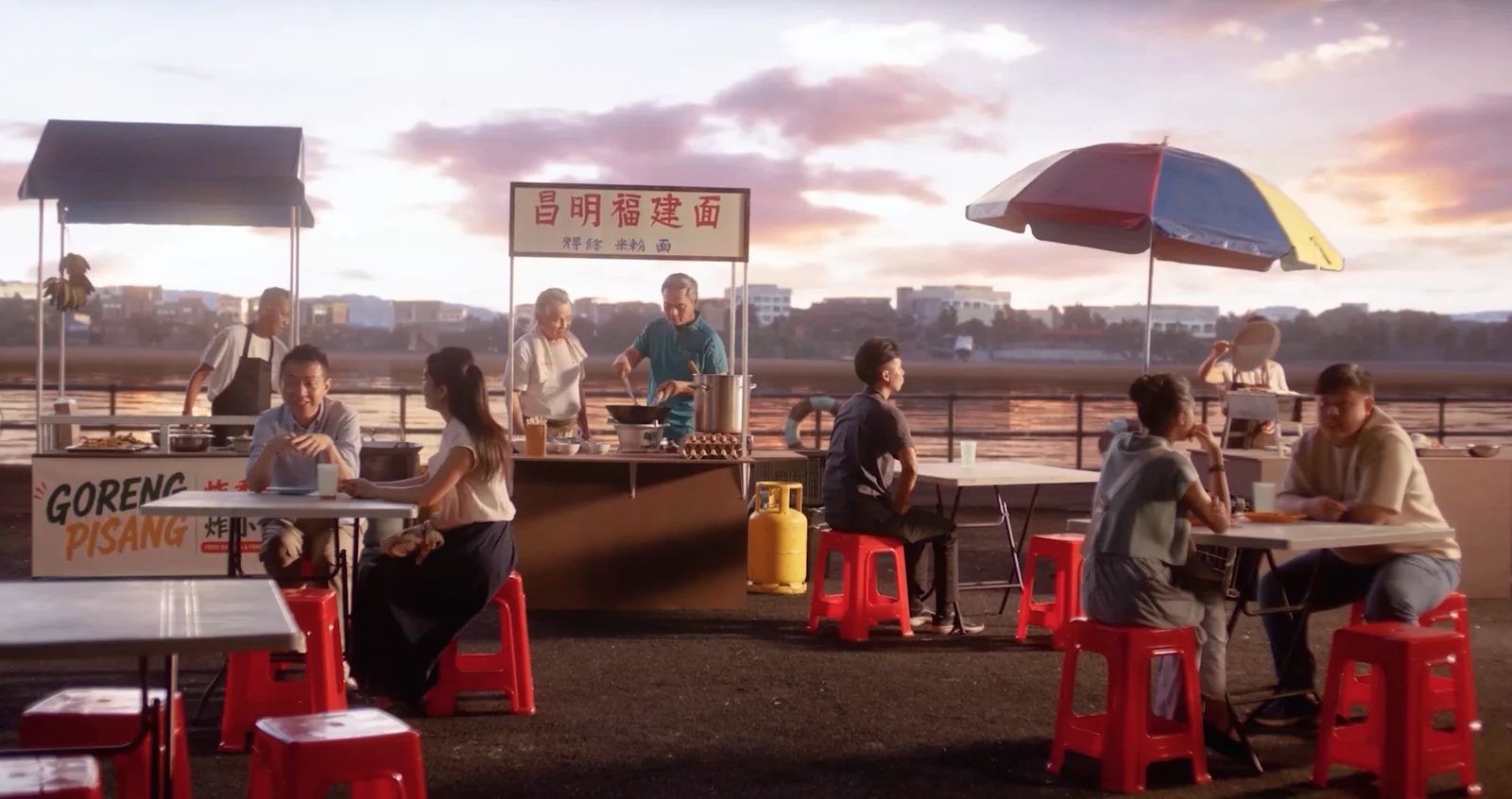
The future hawker centre taught us that quickly. Its scale continued into the LED environment, but the foreground needed things an actor could stand beside, sit at and move through. We used practical stalls, tables and extras, with matching tables and architecture carrying the space into the virtual world. Signboards, additional background people and selected extensions were finished later in post.
The convincing part was the connection: a table in front of the camera feeling as though it belonged to the building behind it. The light had to agree. So did the perspective, the textures and the way people occupied the space.
Our 1960s street needed the same attention. Physical foreground elements, props, flooring and architectural lines helped join the performer to a Singapore that could no longer simply be found and filmed.
Virtual production did not eliminate production design. In many ways, it made production design more important. Every practical choice had to work with the virtual environment from the camera’s point of view. A beautiful background could not fix a foreground that belonged to a different world.
Virtual production gave us a world. The physical details made us believe it.
The real superpower is control
On a conventional location shoot, a lot of filmmaking involves negotiating with reality.
The sun is in the wrong place. The weather changes. The street cannot be closed for long enough. The historical building has disappeared. The futuristic location has the inconvenient problem of not existing yet.
Virtual production changes that conversation. The environment can be shaped around the scene, giving the director and the other departments something they can respond to together.
On our stage, environmental elements could be removed or repositioned. Background colours and lighting could be adjusted. Foliage could move. In the altered 2050 sequence, a virtual tree and its leaves were adjusted live to behave as though affected by wind.
That is a small detail with a large effect. A world starts to feel inhabited when it responds. The background can participate in the scene instead of sitting behind it.
The question shifts from “Can we find a location that looks like this?” to “What should this world actually look like?”
For a time-travel film, that freedom mattered. Our altered future was still Singapore in 2050, but with a different level of development. The point was to show how changed decisions in the past could reshape the same country’s future. Having control over the environment helped us express that distinction visually.
Technology still gets a vote
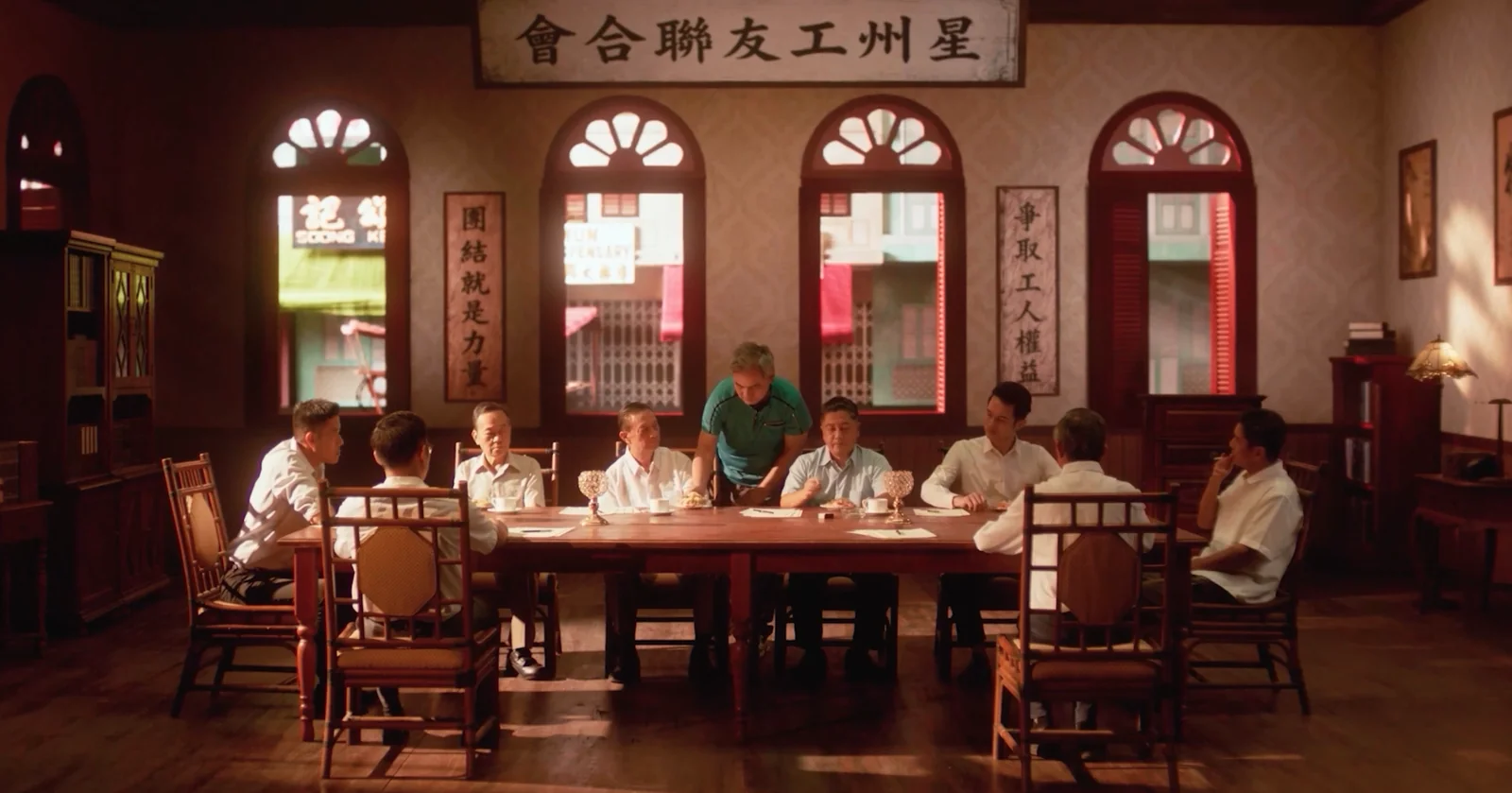
Then came the Union Hall.
We had planned to open the scene with a tracking move. It seemed straightforward on the storyboard. During photography, however, visible moiré appeared: a distracting pattern in the image that pulled attention away from the scene.
It had not appeared during pre-light. We changed lenses. We changed the camera’s distance. We moved almost to the back of the studio, even removing the director’s table to make more room for testing.
Close to two hours went into trying to preserve that move. Eventually, the value of the original shot had to be weighed against the coverage still needed that day.
We stopped fighting it.
The scene became a wide establishing shot followed by tighter coverage, with a controlled digital push added in post. Its purpose survived. The physical tracking move did not.
That was an important filmmaking lesson. VP expands your options, but it does not make every idea practical in every setup. You still need the judgement to recognise when a solution is taking more from the film than it gives back.
The technology serves the film. The film should not become hostage to the technology.
More decisions move to the beginning
By the time you arrive on a VP stage, several questions need answers.
What will be physical? What will be virtual? What will be finished in post? Where will the actor stand? How will the camera move, and what becomes visible during that move?
These questions affect one another. A camera move might reveal the edge of a practical set. A change in blocking might alter how the foreground meets the background. A lighting choice can help the two connect or make the join more obvious.
Our storyboards went through multiple revisions because the shot design and the world design had to develop together.
The shooting order brought another challenge. Scenes were sometimes grouped according to which virtual environment was loaded, rather than where they happened in the story. That meant the actor could move between very different emotional moments while remaining in the same setting.
Non-chronological shooting is familiar in filmmaking, but here the environment added another reason for it. We used multiple script reads and rehearsals, mapping the emotional level of each scene so the performance could carry across the eventual edit.
The audience would watch a character’s journey. On set, we had to keep that journey clear while filming its pieces in a different order.
Technology designed to create digital worlds demanded more human planning, not less. It made the conversations behind how we work even more consequential.
Just because it can happen live does not mean it should
We explored real-time digital background characters. The examples we reviewed did not meet the visual standard we wanted for this film.
The body movement felt artificial. Repeated animation loops became noticeable. Once you saw the pattern, it was difficult to stop watching it.
So we chose to complete the additional background people in post-production.
That decision was about the result we could see, rather than a rule about the technology. A convincing foreground performance should not have to compete with a distracting background figure simply to prove that everything was created live.
The hawker centre ultimately combined physical production, virtual production and post. Each contributed something the image needed.
Sometimes a physical element gives the actor the best interaction. Sometimes VP supplies the environment or control the scene requires. Sometimes post gives an element the finish or scale it needs. The filmmaker’s job is to choose the best method for each part of the image, then make those parts feel whole.
Is virtual production cheaper?
It is a fair question. It is also too simple to answer with the price of a studio day.
Our single-stage approach reduced company moves and transport between locations. It reduced exposure to changing outdoor weather. Combining practical foregrounds with virtual environments also reduced the extent of physical recreation needed for the different periods.
But the stage still needed practical art, props, physical set elements, crew, wardrobe, makeup and extras. The 1960s environments required more foreground construction and more support to move and reset it than we had initially expected.
The resources did not disappear because the background was digital. Some moved into earlier preparation. Others went into making the foreground convincing or keeping the stage running smoothly.
Post-production remained part of the film too. We still needed editing, VFX, colour grading, sound and music. Some effects were already largely captured in-camera, allowing post to focus on enhancement, but that did not make finishing automatic.
For us, a useful comparison has to include preparation, physical production, stage time and post together. The more interesting question is what that combination allows you to create.
When it becomes really exciting
We now see the clearest creative value in stories whose worlds are difficult to reach, control or recreate.
A film might move between countries. It might need an inaccessible location, a street from another century or a city that has not been built. It might depend on a particular light or weather condition that would be difficult to hold across a shoot.
VP gives us another way to approach those problems. It also asks for enough preparation to make the opportunity worthwhile.
The Time Travelling Hawker gave that idea a tangible form. Within one production stage, 1960s Singapore and 2050 Singapore could exist metres apart. The same controlled space could hold a future hawker centre, a period street, a union hall, a time-travel environment and a different version of the future.
That possibility changes the conversation in development. A scene that might previously have been removed because the location was too difficult can be considered again. We can ask what it contributes to the film, then work out the most convincing way to make it.
The best virtual production becomes invisible
When the image works, the audience does not need to know where the practical set ends or where the virtual environment begins.
They should not be admiring the LED wall. They should be wondering what happens next.
Our strongest lessons came back to familiar filmmaking concerns: believable detail, performance continuity, careful preparation and the judgement to change a shot when the story needs you to.
Virtual production matters because it gives filmmakers another tool to imagine worlds that might otherwise remain only on the page.
Sometimes technology changes the kind of story you dare to tell.
THE NEXT FRAME