
Guides
Why do so many corporate videos feel corporate?
An organisation knows what it needs to say. The audience needs a reason to keep watching.

A film can be accurate, polished and approved by everyone in the meeting, yet leave a viewer with little to remember. This often happens before a camera is switched on. The brief starts as a list of messages, departments, milestones and people who must appear. The list may be necessary, but a list is not yet a film.
The useful question is not how to squeeze every point into a running time. It is what one person, arriving without the organisation's background knowledge, should notice, understand or feel. That question changes what gets written, filmed and left out.
A filmed briefing still feels like a briefing
Internal teams have reasons to include context. They know why each initiative matters, which claim needs sign-off and why one person should have a speaking part. A viewer does not arrive with that map. If the film simply moves through the same agenda, it asks the audience to do the work of finding the story.
This is why a sequence of statements over attractive footage can resemble a filmed PowerPoint. The pictures may be handsome, but they do not alter how the information is understood. The film needs a point of view: a question to follow, a person whose choice matters, a process worth seeing, or a tension that makes the answer relevant.
That does not mean hiding facts. It means giving them an order and a context the viewer can use.
Give the film one idea that organises the parts
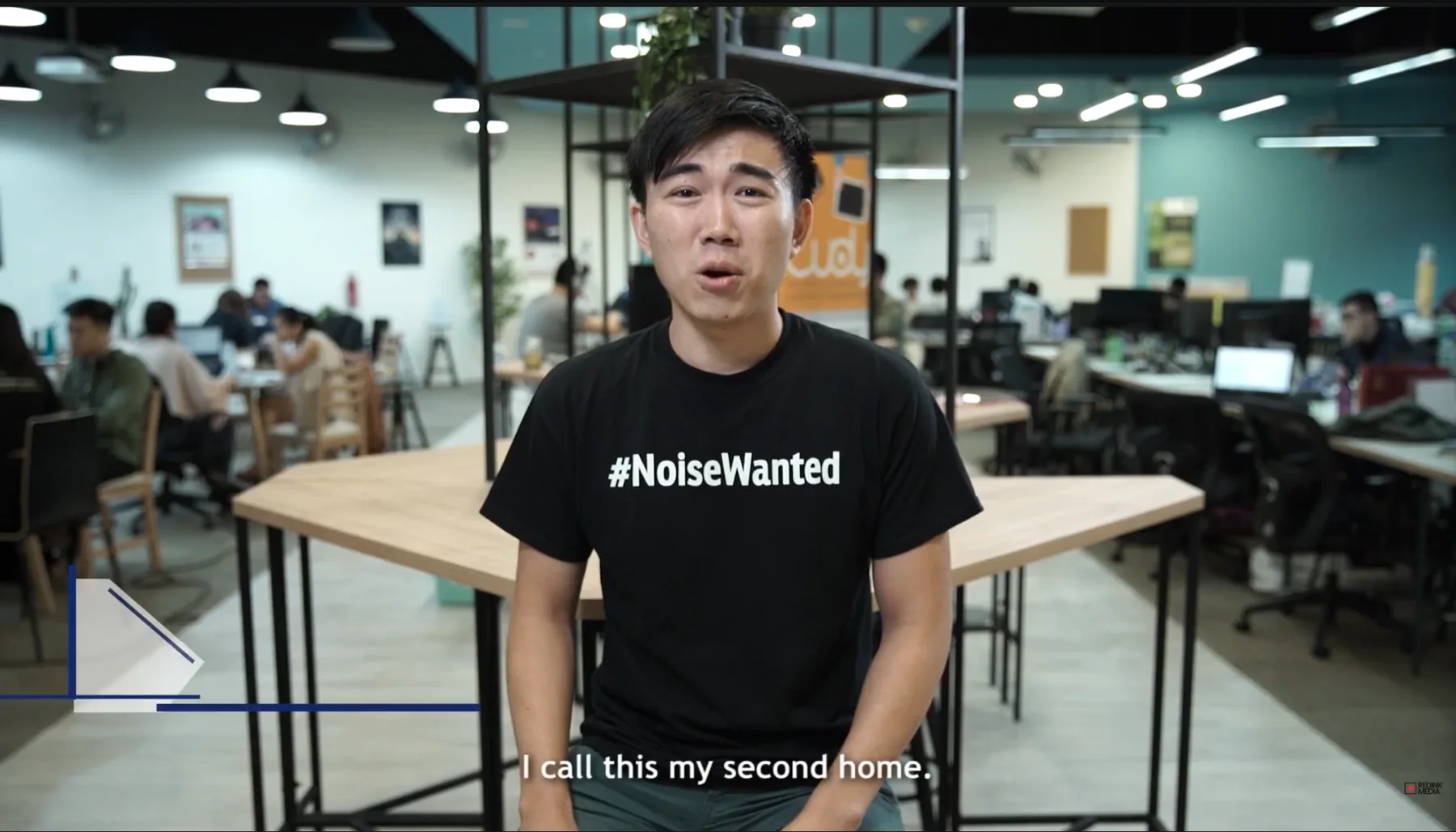
A strong organising idea helps a film include different people and locations without turning into a catalogue. For SMU IIE, the institute needed to introduce its opportunities to current and prospective students. Red Ink built the brand film around individual student experiences rather than an institutional monologue.
The film uses direct-to-camera moments, split screens, motion graphics, time-lapse and drone imagery. Each student story has its own treatment, while rhythm-driven editing and a final reveal about the connecting voice bring the parts together. That structure let the institute feel like a place shaped by people, not a list of offerings.
The lesson is not that every organisation needs split screens. It is that the visual treatment should make a central idea easier to follow. Once that idea is clear, the team can decide which interviews, scenes and graphics earn their place.
The list may be necessary, but a list is not yet a film.
Show the work when the work is the proof
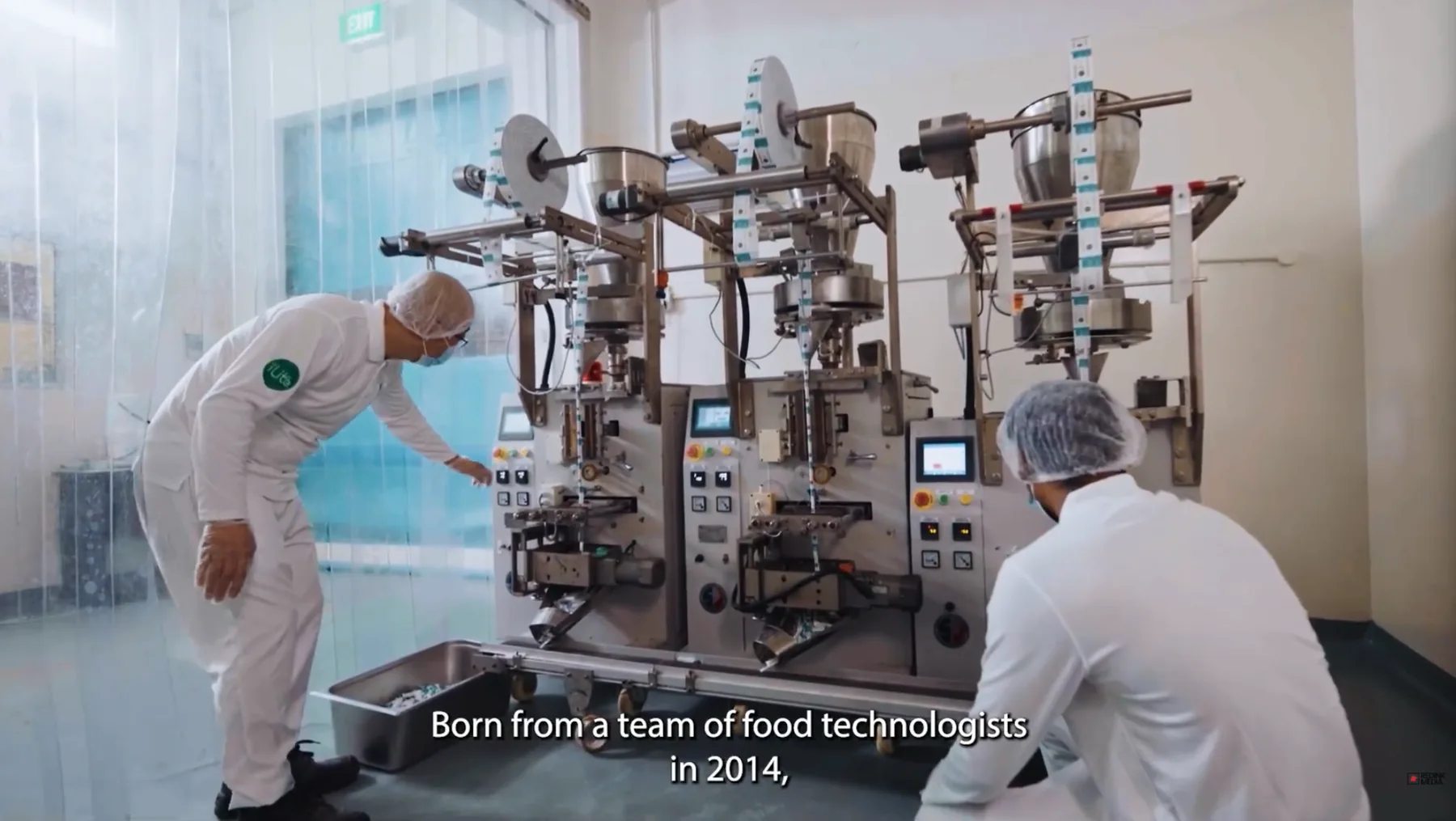
Sometimes the most useful story is already happening in the organisation's real environment. Faesol iLite gave Red Ink a technical product and process to film. Interviews, factory workflows and laboratory footage showed the people and work behind the product; animation helped connect details that a camera alone could not explain.
Red Ink handled creative production, filming and post-production, but did not write the script. The film demonstrates a choice any buyer can consider: if the physical process builds understanding, let the audience see it. Machinery, testing and human effort become part of the argument only when the coverage and edit show why they matter.
Generic footage of people at work rarely does this on its own. The camera must look for the revealing action, and the edit must place it where it answers a question.
Direct for the person beyond the meeting room
Gilbert Chan's feature-film background has made character, performance and timing practical questions for Red Ink. A line can be correct but sound written. An interview can contain the answer but bury it in a long explanation. A scene can have all the required information and still arrive too late. Direction and editing decide whether a viewer can follow the thought.
This matters as much when the subject is a company as when it is a fictional character. A confident expert may need a better question. A non-actor may need the space to say something naturally. A technical point may need an image before it needs a sentence. None of these choices removes the organisation's responsibility for accuracy or approval; they help the information reach someone outside the room.
Make the brief more useful before production starts
A buyer can help by separating essentials from background. What must be factually exact? What should the viewer be able to explain afterwards? Where will they encounter the film? Which people or processes could make the subject tangible? Who needs to approve the claims, and when can they review the treatment rather than only the finished cut?
Those answers give a creative team room to propose a story, while keeping the commercial and stakeholder responsibilities visible. They also make it easier to say no to a scene that looks impressive but does not help the viewer.
Make the message matter to someone
A corporate film does not become less professional when it becomes more human. It becomes more useful when the audience can see why the message matters and has a reason to stay with it.
Common questions
Do we need a finished concept before approaching a production company?
No. Bring the audience, business purpose, essential facts, constraints and examples of what has or has not worked. A treatment can then identify the story and visual approach before the script is locked.
Does an audience-led film mean leaving out important information?
No. It means prioritising what the viewer must understand and placing supporting information where it helps. Some details belong in captions, a companion page or another asset rather than the main film.
Can a corporate film still work through many stakeholder approvals?
Yes, if the team agrees early on which claims are fixed, who owns each approval and what the treatment is trying to achieve. Reviews can then check accuracy and brand needs without losing the audience question that gave the film its shape.
THE NEXT FRAME
Have a brief that needs a clearer route?
Tell us what your audience should understand and what is making the story difficult to see.
Discuss a project