
Ideas & Technology
What We Learned Making an AI Vertical Drama
A short episode needs a reason to end. The next one needs a reason to begin.
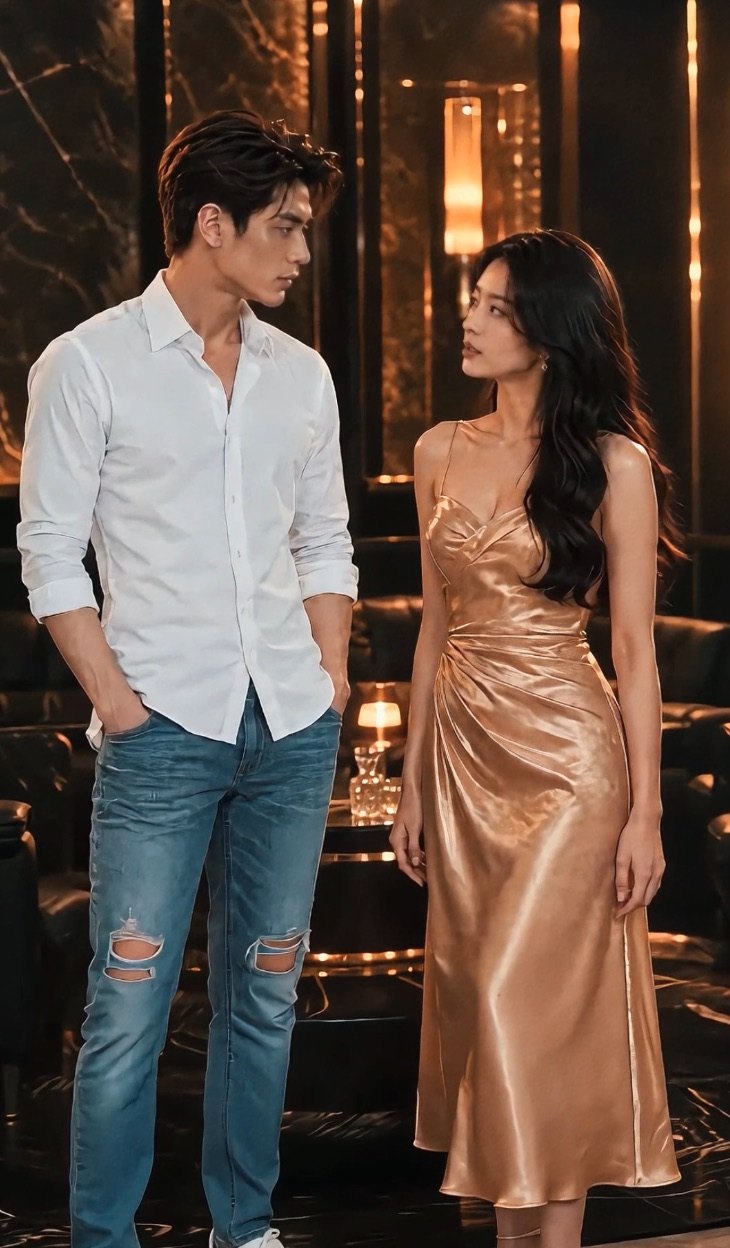
I Accidentally Married Singapore's Most Hated Billionaire is a Red Ink Original created using AI production. It is an episodic story made for a portrait screen, with characters and consequences that carry from one instalment to the next. There is no client behind it. We developed it to explore what short-form fiction asks of a filmmaker when the viewing frame, episode length and production method all change.
The most useful lesson so far is simple: a new production tool does not remove the need to make story decisions. It makes those decisions more visible.
1. Start with a person, not a prompt
The premise gives us a recognisable vertical-drama hook: a woman refuses a wealthy customer's demand, and a stranger steps in. But the scene only works if the audience understands her choice before it becomes interested in his identity. Maya's refusal is the point of view. Adrian's intervention changes the situation; it does not replace her as the lead.
That distinction shaped the series bible, the first episode scripts and the shot plan. We kept asking what each character wants, what they get wrong and what a decision costs them. An arresting image can win a moment of attention. A character whose decisions matter gives viewers a reason to stay.

2. Write the cut and the comeback together
An episode ending is more than a withheld answer. It should change the situation. When one instalment cuts on a demand, the next has to answer that demand before creating a new problem. Otherwise the series feels as if it is restarting the same scene.
We built the early episode architecture as pairs: ending and next opening, promise and payoff. The plan tracks what each character knows, what the viewer knows and what has changed in the relationship. That gives the story momentum without relying on a louder insult or a fresh surprise every minute.
A new production tool does not remove the need to make story decisions. It makes those decisions more visible.
3. Make continuity a shared production record
In a continuing drama, small details become story facts. A character's position after an action, a note left on the floor, the side of a reaction, a costume and a repeated location all have to survive the cut into the next episode. AI production makes this especially important because a new image can look convincing on its own while failing to match the image beside it.
Our working documents therefore treat faces, voices, wardrobe, locations, props and eyelines as references to carry forward. The edit plan records the state at each episode break. We also favour simple, readable inserts for text or evidence, rather than expecting an image-generation step to produce every word accurately inside the shot.
4. Compose for the phone, then direct for performance
A portrait frame changes blocking. A wide crowd, complex physical action or several people speaking over one another can become hard to read on a phone. The early episodes instead use a dominant situation, focused singles, motivated reactions and sound to connect moments. Where an action is difficult to show clearly, a look, a sound and the changed aftermath can tell it more effectively.
The short running time still needs room for a response to land. A timed script is a starting estimate, not a command to make every actor speak faster. We test the spoken rhythm, then remove repetition before sacrificing a choice or emotional beat. The frame may be smaller; the performance should not feel smaller.

5. Let the production method serve the story
AI production gives us another way to build images for an original series. It does not decide which moment deserves a close-up, whether a refusal is credible, or whether the next episode earns its return. Those decisions sit in the writing, direction and edit.
Story decisions still lead
That is also why we describe this work precisely. It is a Red Ink Original created using AI production, not a commissioned brand campaign. The uploaded stills show the visual world; they are not evidence of audience numbers or a release milestone. For us, the experiment is valuable because it tests how story architecture, character continuity and phone-first filmmaking work together.
Common questions
What is a vertical drama?
It is a continuing fictional story composed for a portrait screen, usually watched on a phone. Each short episode has its own dramatic movement while carrying characters and consequences into the next.
Is this a client project?
No. I Accidentally Married Singapore's Most Hated Billionaire is a Red Ink Original. It is presented as an original AI-production project, not as commissioned work or proof of a client's results.
Does AI production mean the story is automatic?
No. This project uses a series bible, episode architecture, scripts and editorial shot plans. AI production is part of how images are made; story choices, direction, continuity and the edit still need deliberate work.
Is an episodic series right for every brand?
No. A series needs a reason for viewers to return: a continuing character, question, conflict or useful progression. For some briefs, one clear film will do a better job. The format should follow the audience and the message.
THE NEXT FRAME
Could your story grow across episodes?
Tell us about the audience and the idea. We can help assess whether an episodic format serves the brief.
Discuss a project