
GILBERT CHAN
Gilbert Chan: a filmmaker's eye on the audience.
Gilbert is a Singapore filmmaker, writer and director who has written and directed six feature films. At Red Ink, that experience is applied to the practical question behind a brand or public brief: what will make someone stay with this story long enough for the message to land?

GILBERT CHAN
From feature films to a sharper question
Gilbert's feature work spans horror, comedy and drama. It includes 23:59, Ghost Child and Love Matters, which he co-wrote and co-directed with Jack Neo. His debut feature S11 was selected for the Shanghai International Film Festival and received an Audience Choice Award at the Toronto-Singapore Film Festival. His writing has been recognised by the Singapore Screenplay Awards. The genres differ, but the working question is the same: where does an audience find a reason to care?
Feature filmmaking develops a feel for what can be shown rather than explained, how a character can make an unfamiliar situation legible, and when a change of pace earns an emotional payoff. Those instincts are useful well beyond a cinema screen.
SELECTED PRESS & FILM COVERAGE
Work seen beyond the set.
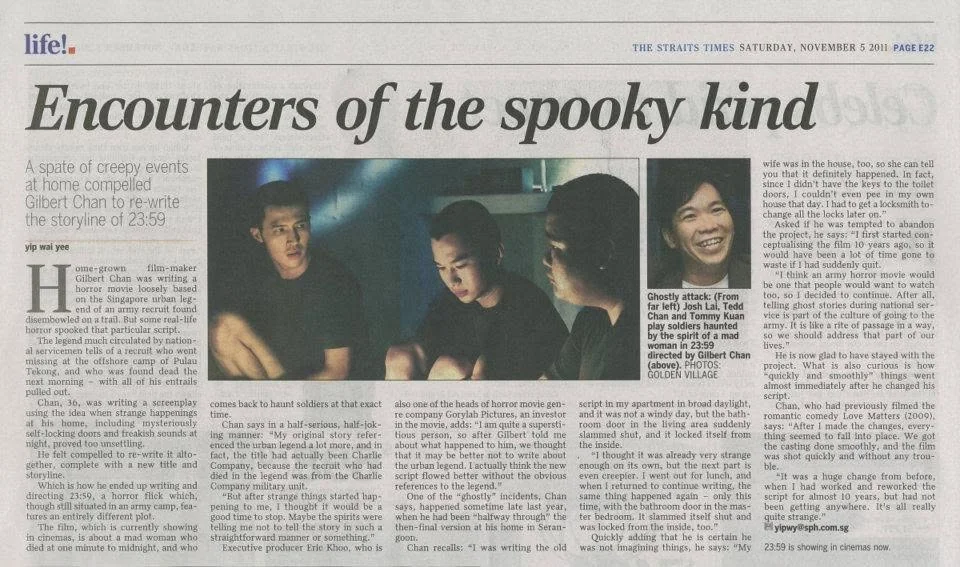
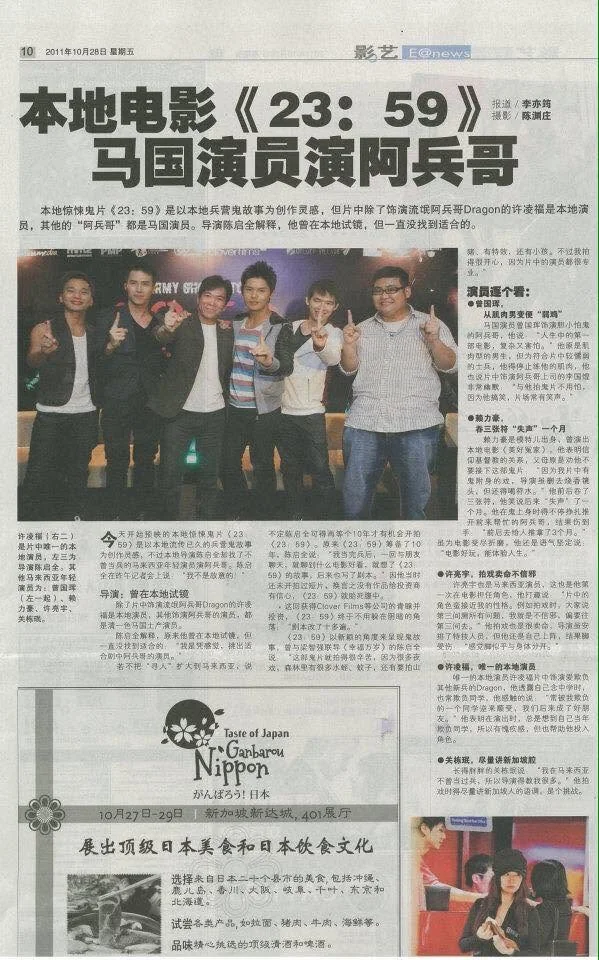

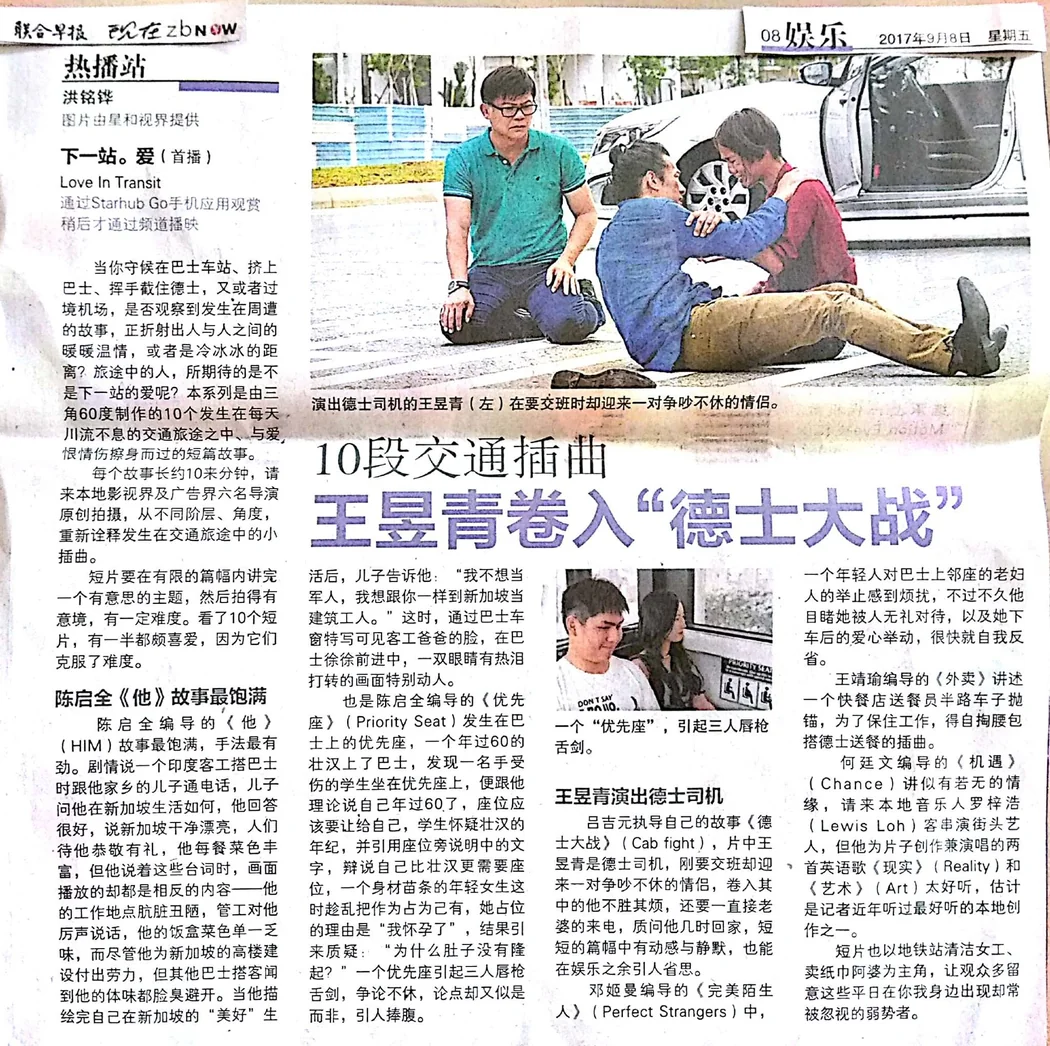
Attention begins with people
An organisation knows its own message. The audience does not arrive with that context, and it may not have asked for the film. Gilbert looks for the point where the subject meets a recognisable human experience. A scene may need conflict; an interview may need a better question; a technical process may need a visual route. Writing and direction are ways of making the audience's attention possible, not decorative additions after the information has been approved.

Performance, character and pace
Directing actors means making the intended moment feel truthful on camera. Directing people who are not performers can mean creating the conditions for them to speak or act naturally. The edit then decides what the viewer learns, when they learn it and whether they want to stay. This is why a short film can feel full of story and a long film can still feel empty. Gilbert brings those choices to Red Ink's treatments, scripts and productions.
The same craft in a different brief
Red Ink's work applies those filmmaking decisions to clients with commercial and public responsibilities. For StarHub's Love in Transit, Gilbert wrote and directed Priority Seat, using three competing characters and a familiar Singapore bus situation to carry a courtesy message. The film has reached more than 18 million views across social platforms and received Best Script at the China-ASEAN Short Video Competition. In SPF Myth or Fact, Red Ink's team put short stories before factual public answers and made them work through multiple stakeholder reviews. Faesol iLite and SMU IIE show other routes: industrial process made visible and student stories given a distinctive brand structure.

His role at Red Ink today
Gilbert leads creative development and helps decide what form a film should take. His exact writing, directing and review responsibilities are agreed for each project. Producers, crews, animators, editors and other collaborators carry the work through planning, production and delivery. The buyer should know who is making the decisions and who is responsible for the schedule, not assume Gilbert personally directs every frame.
Why a buyer should care
A feature-film director has spent years learning to earn attention rather than assume it. For a marketing or communications buyer, that means a stronger chance of finding the story inside a dense brief, directing performances that feel human and protecting the audience's experience while the film passes through factual, brand and stakeholder review. The practical benefit is not a cinematic label on a corporate film. It is creative judgment applied where the brief is most likely to lose the viewer.
THE NEXT FRAME
Have a message worth getting right?
Share the brief while there is still room to make it better. We will look at the audience, the decision the film needs to help them make, and the practical constraints before recommending a route.
Start a project